
The EU to implement a biometric “entry and exit” system for non-European travelers
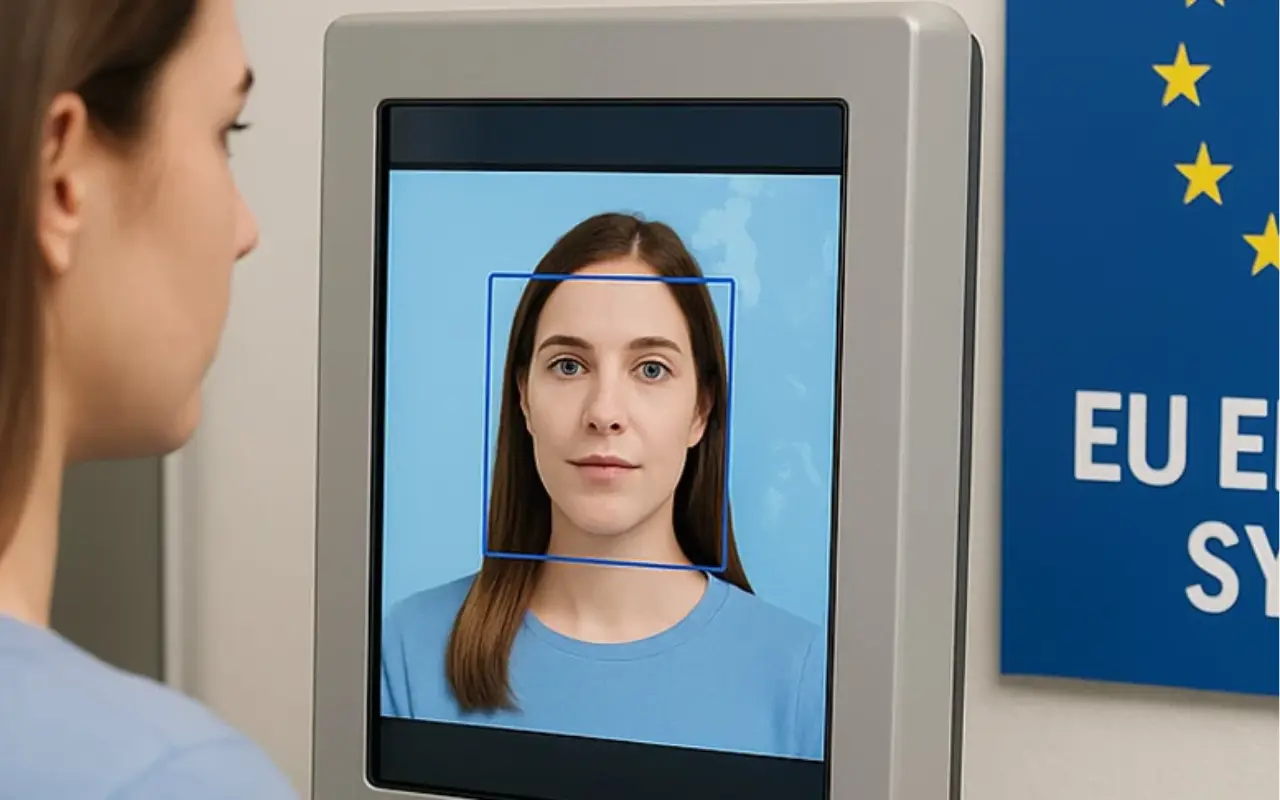
The European Union is making a technological leap in border control: from October 12, 2025, travelers who are not EU citizens will be required to undergo biometric checks upon entering or exiting the Schengen Area. The new EES system will eliminate traditional passport stamps and replace them with facial scans and fingerprints. This measure marks one of the most significant changes in decades in migration and security management. In this article we explore what the EES is, why it is being implemented, how it will work, its implications for travelers, and the challenges ahead.
Goals and benefits of EES
The EES aims to modernize border checks, enhance security, automate processes, and detect irregular stays more efficiently. It enforces the 90/180 day stay rule for non-EU visitors more reliably. It is expected to be more efficient than manual stamping, reducing wait times and human error. Digital records also strengthen the ability to counter migration fraud, illegal entries, and transnational crime.
Who will the EES apply to?
The system applies to non-EU nationals traveling for short stays in the Schengen Area, whether they need a short-stay visa or not. Citizens of the EU, Schengen residents, and certain exempt categories are not subject. Children under 12 are exempt from fingerprint collection, though facial scans may still apply.
Data captured by the new system
On crossing, EES collects full name, travel document type, date and place of border crossing, and biometric data (facial image, fingerprints). On subsequent crossings, biometric verification is used rather than re-capture (if passport unchanged). The system also records entry rejections, stay duration, and irregularities.
Curiosities and lesser-known facts
Although EES becomes obligatory in 2025, it has been under planning and debate for over a decade. The eu-LISA agency, responsible for the system, also manages other pan-European border and migration systems. In pilot tests, registering under EES took about two minutes per person. Once registered, frequent travelers may cross faster using facial recognition only, without repeating fingerprint scans unless the passport changes.
Potential benefits for member states
For Schengen states, EES offers more efficient migration flow control, less manual processing, better detection of overstays, and optimized border security resource allocation. Unified digital records make cross-border coordination between states smoother.
What is the EES (Entry/Exit System)?
The EES is a large-scale automated IT system created by the EU to electronically register the entries and exits of third-country nationals (non-EU/EEA/Swiss) at the external borders of the Schengen Area. With EES, passport stamps are replaced by biometric data capture (facial image and fingerprints) combined with travel data (document, date, place) to compute and verify permitted stays. The system is mandated under EU law and will be managed by the eu-LISA agency.
Tips for travelers under the new system
Allow extra time for first crossings under EES. Keep passport and documents valid and updated. Check whether your arrival point has EES capability. Avoid tight scheduling if you’re a non-EU traveler. Under 12? You won’t be fingerprinted but may have a facial scan.
Implications for travelers: what changes
Passport stamps will no longer be used under the EES — all record keeping will be digital. On a traveler’s first crossing under EES, one must undergo facial scanning and fingerprinting, adding a few extra minutes. Travelers refusing biometric data may be denied entry. On later crossings, biometric comparison suffices if conditions unchanged.
Critical scenarios and points of attention
High-traffic periods (vacation, holidays) may stress the system and cause delays. Some border posts reportedly are not yet fully prepared. Land border crossings with heavy road traffic may be more sensitive to delays. Integrating EES with other security and migration databases without vulnerabilities will be key.
Challenges, controversies and data protection
Privacy concerns arise about how biometric data is stored and used; EU data protection laws (GDPR) must govern its secure handling. Logistical readiness is a challenge in heavy-traffic points — potential for queues if kiosks or staff are insufficient. Some worry that travelers from countries with limited access to digital infrastructure might be disadvantaged.
Implementation timeline: phases and deadlines
EES launches on October 12, 2025, and will be rolled out progressively over about six months, with full deployment expected by April 10, 2026. During this transitional phase, biometric collection may not be activated in all border crossings immediately, but phased in.
Relation with ETIAS and the future of European travel
EES is not alone: in late 2026, ETIAS (European Travel Information and Authorization System) will kick in, requiring visa-exempt travelers to obtain a digital pre-travel authorization. While EES verifies border crossings, ETIAS filters travelers before journey starts. Together, they reflect the EU’s vision of a digitized, secure, and pre-screened border environment.
Conclusion
The EES system marks a technological and security milestone in Europe’s borders. While it brings operational, technical, and ethical challenges, this change aims to modernize control, enhance accuracy, and strengthen the integrity of the Schengen Area. For non-EU travelers, it means adapting to new procedures: passport alone will no longer suffice, as biometric identity becomes a central component. Being prepared, informed, and patient will be key in this new era of travel to Europe.